
Gaming performance depends on more than having an expensive computer or the latest gaming device. The settings you choose can significantly affect how smoothly a game runs, how quickly it responds, and how enjoyable the experience becomes. Whether someone plays competitive shooters, racing games, adventure titles, or online games, understanding the available performance settings can make a noticeable difference.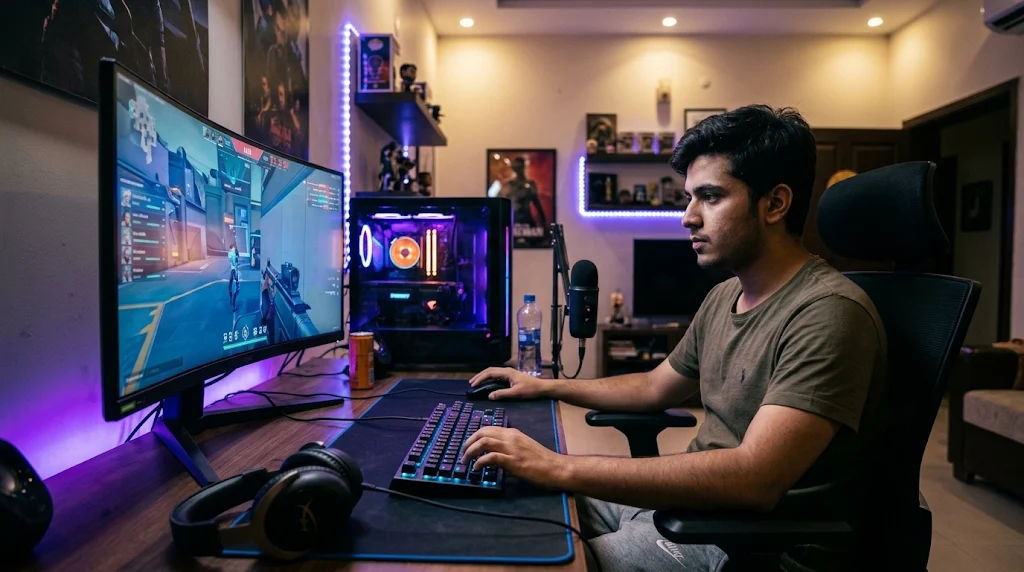
Every game offers different graphics, display, audio, and control options. Some settings improve visual quality, while others reduce the workload on your computer or gaming device. Finding the right balance between appearance and performance is important for achieving a smooth gaming experience.
The good news is that improving gaming performance does not always require purchasing new hardware. Adjusting existing settings can help reduce unnecessary processing demands, improve frame rates, and make gameplay more responsive. Even a few carefully selected changes can produce meaningful results.
This comprehensive guide explains which gaming settings improve performance, how different options work, and how players can adjust their systems to achieve better results. It also explores common mistakes, device-specific recommendations, and practical ways to maintain consistent performance.
Relationship Between Gaming Settings and Performance
Forsinkelse kan forekomme i forskellige typer spil og på næsten alle gamingplatforme, herunder OPEN 88. Det kan opstå lejlighedsvis eller fortsætte gennem hele spilsessionen.
De fleste multiplayer-spil kommunikerer med eksterne servere. Når en spiller udfører en handling, sendes informationen via internettet til spilserveren.
When a game uses demanding graphics settings, the computer or console must perform more calculations. This can increase the workload on the graphics processor, central processor, and memory.
If the hardware cannot handle these demands comfortably, players may experience lower frame rates, stuttering, delayed responses, or longer loading times.
Adjusting settings helps balance the workload. Instead of forcing the system to process every visual effect at maximum quality, players can prioritize the options that contribute most to a smooth experience.
Why Performance Settings Matter
Performance settings are important because they influence several aspects of gameplay.
These include:
-
Frame rate: Determines how many images appear on the screen every second.
-
Input response: Affects how quickly the game responds to keyboard, mouse, or controller commands.
-
Graphics quality: Controls textures, shadows, reflections, and other visual effects.
-
System temperature: Influences how much processing work the hardware performs.
-
Loading speed: Depends on storage performance, memory, and game optimization.
The ideal settings depend on the game, hardware specifications, and personal preferences.
1. Lower Graphics Quality for Smoother Gameplay
Graphics quality is one of the most important settings affecting gaming performance.
High-quality graphics can make environments look realistic, but they also require additional processing power. Lowering selected graphics options can improve frame rates without making the game difficult to enjoy.
Adjust Texture Quality
Texture quality determines how detailed surfaces appear.
High-resolution textures make objects, buildings, characters, and landscapes look sharper. However, they require more video memory, commonly called VRAM.
Players with graphics cards containing limited VRAM may experience performance problems when using maximum texture settings.
Medium or high texture quality is often a reasonable starting point, depending on available memory.
Reducing texture quality can help prevent stuttering when the graphics card runs out of available VRAM.
Reduce Shadow Quality
Shadows create depth and realism, but rendering detailed shadows requires additional graphical processing.
Ultra-quality shadows can place unnecessary pressure on the graphics card.
Reducing shadow quality to medium or low can improve performance in demanding games. The difference may be particularly noticeable in environments containing numerous objects, buildings, and moving characters.
For competitive gameplay, lower shadow settings are often a practical choice.
Disable Unnecessary Visual Effects
Many games include effects such as motion blur, film grain, depth of field, and chromatic aberration.
These features can improve cinematic presentation, but they are not always necessary.
Disabling unnecessary effects can make the screen clearer and sometimes reduce graphical processing requirements.
Players should experiment with individual options rather than assuming every visual effect has the same performance impact.
2. Choose the Right Screen Resolution
Resolution determines how many pixels appear on the display.
Higher resolutions provide sharper images, but they also require the graphics processor to render more pixels.
For example, 1440p requires more graphical processing than 1080p, while 4K requires considerably more.
Use a Resolution Your Hardware Can Handle
Choosing the correct resolution is essential for maintaining stable performance.
If your computer struggles to maintain a consistent frame rate at its native resolution, reducing the in-game resolution may help.
Common gaming resolutions include:
-
1280 × 720 for lower graphical demands.
-
1920 × 1080 for standard Full HD gaming.
-
2560 × 1440 for sharper Quad HD visuals.
-
3840 × 2160 for 4K gaming.
A 1080p display is still a suitable choice for many players because it offers a reasonable balance between image clarity and performance.
Understand Render Scaling
Render scaling allows games to render images at a different resolution from the display's native resolution.
For example, a game running on a 1440p monitor may render at a lower internal resolution and then scale the image.
This can improve frame rates while preserving the display's output resolution.
However, reducing render scaling too much can make images appear blurry. Players should adjust it gradually until they find an acceptable balance.
3. Set an Appropriate Frame Rate Limit
Frame rate is one of the most noticeable aspects of gaming performance.
It measures how many frames a system displays every second. Higher frame rates generally create smoother movement and more responsive visual feedback.
Understand Different Frame Rate Targets
Different games benefit from different frame rate targets.
For example:
-
30 FPS can provide an acceptable experience in some slower-paced games.
-
60 FPS is a common target for smooth general gameplay.
-
120 FPS can provide smoother movement on compatible displays.
-
144 FPS or higher can benefit certain competitive games when supported by the hardware.
Higher numbers are not automatically better if the system cannot maintain them consistently.
A stable frame rate is often preferable to frequent fluctuations between high and low values.
Use Frame Rate Limits Carefully
A frame rate limiter restricts how many frames a game produces.
Setting a reasonable limit can reduce unnecessary processing, heat generation, and power consumption.
For example, a player using a 60Hz monitor may choose a 60 FPS limit if the system can maintain it consistently.
Players with higher-refresh-rate displays can select a suitable target based on their hardware.
4. Enable the Right Display Synchronization Settings
Display synchronization settings help coordinate the frame output of the graphics card with the monitor's refresh cycle.
Choosing the right option can improve visual consistency.
Understand V-Sync
Vertical synchronization, commonly known as V-Sync, helps prevent screen tearing.
Screen tearing occurs when different portions of multiple frames appear together during screen updates.
Although V-Sync can improve visual presentation, it may introduce additional input latency in certain situations.
Players should test it according to their priorities.
For slower-paced games, smoother image presentation may be more important than extremely fast input response.
Competitive players may prefer alternative synchronization technologies when their monitors support them.
Consider G-Sync and FreeSync
G-Sync and FreeSync are adaptive synchronization technologies.
They allow compatible monitors to adjust their refresh behavior according to the graphics card's frame output.
This can reduce screen tearing and stuttering while maintaining a responsive experience.
Players should check monitor compatibility and enable the appropriate technology through the display or graphics settings.
5. Adjust Anti-Aliasing Settings
Anti-aliasing reduces the appearance of jagged edges around objects.
Without anti-aliasing, diagonal lines and curved surfaces may appear uneven.
However, some anti-aliasing methods require significant processing power.
Choose an Appropriate Anti-Aliasing Method
Games may offer several anti-aliasing options.
These include:
-
FXAA
-
TAA
-
MSAA
-
Other game-specific anti-aliasing methods
Each method has different visual and performance characteristics.
FXAA is generally less demanding than traditional high-sample MSAA, although it can produce softer images.
TAA can improve image stability but may introduce some motion-related softness.
The best choice depends on the game's implementation and your hardware.
Players looking for higher frame rates can begin with a less demanding option and compare the results.
6. Use DLSS, FSR, or XeSS When Supported
Modern graphics technologies can improve performance by rendering games at a lower internal resolution and reconstructing a higher-resolution image.
These technologies are particularly useful in demanding games.
NVIDIA DLSS
NVIDIA DLSS uses artificial intelligence and compatible NVIDIA graphics hardware to reconstruct images.
Depending on the game and graphics card, DLSS can improve frame rates while maintaining good image quality.
AMD FSR
AMD FidelityFX Super Resolution provides image upscaling across a range of supported graphics hardware.
It can help players achieve better performance without requiring a complete hardware upgrade.
Intel XeSS
Intel XeSS is another upscaling technology designed to improve performance and image quality in supported games.
Players should select the quality mode that best matches their needs.
Quality mode generally prioritizes visual clarity, while performance mode places greater emphasis on higher frame rates.
7. Optimize Background Applications
Gaming performance is not determined by in-game settings alone.
Applications running in the background can consume valuable system resources.
Web browsers, video editors, file transfers, and unnecessary startup applications may use RAM, CPU resources, and network bandwidth.
Close Unnecessary Applications
Before launching a demanding game, close applications that are not needed.
For example, closing unused browser tabs can reduce memory consumption.
Similarly, pausing unnecessary downloads may prevent network congestion.
This can be especially helpful on systems with limited RAM or slower processors.
Manage Startup Programs
Many applications automatically launch when a computer starts.
Although some background services are necessary, others may not be useful during gaming sessions.
Use your operating system's startup application settings to disable programs you do not need.
Avoid disabling unfamiliar system services because some are important for normal computer operation.
8. Select the Correct Power Settings
Power management settings influence how a computer distributes energy to its hardware.
A system configured for maximum energy savings may limit performance under certain conditions.
Use an Appropriate Power Mode
Windows offers different power modes designed for different situations.
For demanding games, a balanced or performance-oriented power mode may help the system maintain appropriate processing speeds.
However, the best option depends on your computer and cooling system.
Gaming laptops may benefit from their manufacturer's recommended performance profile when connected to their normal power supply.
Avoid Unnecessary Power Restrictions
Some gaming systems include battery-saving features that reduce processor or graphics performance.
These features can be useful for extending battery life, but they may not be suitable when prioritizing gaming performance.
Players should understand the available power options and choose settings that match their needs.
9. Keep Graphics Drivers Updated
Graphics drivers help the operating system communicate with the graphics hardware.
Updated drivers can improve compatibility, fix technical problems, and provide optimizations for newly released games.
Check for Official Driver Updates
Players should obtain drivers through official manufacturer sources.
The main graphics hardware manufacturers include:
-
NVIDIA.
-
AMD.
-
Intel.
Installing appropriate drivers can resolve certain graphical problems and improve game compatibility.
However, not every driver update guarantees higher frame rates.
Players should also avoid unofficial driver packages because they may contain unwanted software or cause compatibility problems.
10. Optimize Network Settings for Online Gaming
Graphics settings influence visual performance, but network conditions affect multiplayer responsiveness.
A game may display excellent frame rates while still experiencing connection-related delays.
Understanding the difference between network performance and graphics performance is important.
Understand Ping and Latency
Ping measures how long data takes to travel between your device and a game server and return.
Lower latency generally means quicker communication with the server.
High ping can make player movements appear delayed and create difficulties during competitive matches.
To improve connection quality, consider using a reliable internet connection, choosing an appropriate server region, and avoiding unnecessary network activity.
Use a Stable Connection
Ethernet connections generally provide more consistent network performance than wireless connections.
However, modern Wi-Fi connections can also work well when the signal is strong and interference is limited.
If you use Wi-Fi, position your router appropriately and avoid placing it behind large obstacles.
Also, check whether other devices are using significant bandwidth during gameplay.
Select the Correct Server Region
Many multiplayer titles allow players to choose their preferred server region.
Selecting a geographically appropriate server can reduce the distance that data travels.
This may help lower latency and improve the overall multiplayer experience.
11. Configure Mouse and Controller Settings
Control settings influence how quickly and accurately players can interact with a game.
Although they do not necessarily increase graphical frame rates, they can improve the feeling of responsiveness.
Adjust Mouse Sensitivity
Mouse sensitivity determines how much the camera moves when the mouse is moved.
Extremely high sensitivity may make precise aiming difficult, while very low sensitivity may require excessive physical movement.
Players should choose a comfortable setting and maintain consistency.
Some games also offer raw input options that allow the game to receive mouse movement more directly.
Configure Controller Settings
Controller settings may include sensitivity, dead zones, vibration, and response curves.
A smaller dead zone can make a controller respond to smaller stick movements, but setting it too low may cause unwanted movement if the controller has stick drift.
Adjust these settings gradually.
The goal is to achieve predictable control without unnecessary movement or discomfort.
12. Monitor Temperature and Hardware Performance
Temperature management is another important part of gaming optimization.
When processors or graphics cards become excessively hot, they may automatically reduce operating speeds to protect themselves.
This behavior is commonly called thermal throttling.
Maintain Proper Airflow
Computers need sufficient airflow to remove heat.
Keep ventilation openings clear and place laptops on stable surfaces that do not block their cooling vents.
Desktop users should also ensure that their cases have appropriate airflow.
Monitor Hardware Usage
Performance monitoring tools can display information about:
-
CPU utilization.
-
GPU utilization.
-
RAM consumption.
-
GPU temperature.
-
CPU temperature.
-
Frame rate.
These measurements help identify possible performance limitations.
For example, consistently high GPU usage may indicate that graphics processing is the main limitation.
Meanwhile, unusually high memory consumption may suggest that background applications or demanding game settings are contributing to performance problems.
13. Optimize Storage and Loading Settings
Storage performance affects how quickly games load and how efficiently certain assets are accessed.
Modern games can contain large environments, detailed textures, and extensive audio files.
Install Games on an SSD
Solid-state drives generally offer significantly faster loading speeds than traditional hard disk drives.
Installing games on an SSD can reduce loading times and improve asset streaming in supported titles.
NVMe SSDs can provide particularly fast data transfer speeds.
However, an SSD does not automatically increase frame rates in every game.
Its main advantages relate to loading and storage access.
Maintain Sufficient Free Storage
A nearly full storage drive can create maintenance and update difficulties.
Keeping sufficient free space helps maintain normal system operation.
Players should remove unnecessary files and applications through standard operating system tools rather than deleting unfamiliar system folders.
14. Recommended Gaming Settings for Different Hardware
Not every gaming system requires the same configuration.
A settings combination that works well on an expensive desktop may not be suitable for an entry-level laptop.
The following table provides a general starting point.
|
Setting |
Lower-End Hardware |
Mid-Range Hardware |
High-End Hardware |
|---|---|---|---|
|
Resolution |
720p–1080p |
1080p–1440p |
1440p–4K |
|
Texture quality |
Low–Medium |
Medium–High |
High |
|
Shadow quality |
Low |
Medium |
High |
|
Anti-aliasing |
Low |
Medium |
Medium–High |
|
Motion blur |
Off |
Optional |
Optional |
|
Reflections |
Low |
Medium |
High |
|
Frame rate target |
Stable 30–60 FPS |
Stable 60–120 FPS |
Higher, if supported |
|
Upscaling |
Performance mode |
Quality or Balanced |
Quality or Native |
These recommendations are not universal requirements.
Actual results depend on the game's optimization, graphics hardware, processor, memory, and display capabilities.
15. Common Gaming Optimization Mistakes to Avoid
Players sometimes make unnecessary changes while trying to improve gaming performance.
Understanding common mistakes can prevent problems.
Setting Everything to Maximum
Maximum graphics settings do not always produce the best experience.
Some options consume significant processing power while offering only minor visual improvements.
It is better to adjust demanding settings individually.
Installing Unnecessary Optimization Software
Unknown optimization applications may introduce unwanted background processes or change important system configurations.
Use built-in operating system tools and official hardware software whenever possible.
Ignoring Game Updates
Game developers regularly release updates that address bugs, compatibility problems, and performance issues.
Keeping games updated can help maintain stability.
Expecting Every Setting to Increase FPS
Some settings improve visual clarity, reduce latency, or improve network stability rather than directly increasing frame rates.
Players should understand what each option actually changes.
16. How to Find the Best Gaming Settings for Your System
Finding suitable settings requires a little testing.
Instead of changing everything simultaneously, make adjustments gradually.
Start by recording your current frame rate and observing how the game performs during normal gameplay.
Next, reduce demanding graphics options such as shadows, reflections, and volumetric effects.
Test the game again and compare the results.
If performance improves without significantly affecting visual quality, keep those changes.
You can also experiment with resolution scaling, frame rate limits, and synchronization settings.
For multiplayer titles, check network latency separately from graphical performance.
This approach helps identify which adjustments provide the greatest benefit.
Create a Personal Performance Profile
Players who regularly switch between different games may benefit from keeping separate settings profiles.
For example, a competitive shooter may require lower graphics settings and a higher frame rate target.
A single-player adventure game may benefit from higher texture quality, detailed lighting, and a more cinematic presentation.
Using different configurations allows players to prioritize the experience they want from each game.
Conclusion
Choosing the right gaming settings is one of the simplest ways to improve overall gaming performance. Players do not always need expensive hardware to enjoy smoother gameplay. Understanding how different settings affect system resources can help them make better decisions and get more value from their existing devices.
Graphics options such as texture quality, shadows, reflections, anti-aliasing, and resolution can significantly influence frame rates. Adjusting these options according to hardware capabilities helps create a better balance between visual quality and performance.
Display settings are equally important. Choosing an appropriate frame rate target, understanding V-Sync, and using compatible adaptive synchronization technologies can improve visual consistency. Upscaling technologies such as DLSS, FSR, and XeSS can also provide useful performance improvements in supported games.
Beyond graphics, players should pay attention to background applications, power management, storage, and hardware temperatures. Keeping graphics drivers updated and maintaining proper airflow can help systems operate reliably.
For multiplayer experiences, network stability and latency deserve separate attention. A stable internet connection, appropriate server selection, and sensible network management can make gameplay more responsive.
The most effective approach is to experiment with settings gradually rather than changing everything at once. Every gaming system has different capabilities, so there is no single configuration that works perfectly for everyone.
Ultimately, the best settings are those that provide stable performance, comfortable controls, clear visuals, and reliable responsiveness. By understanding these adjustments, players can enjoy smoother gameplay and make their gaming experience more enjoyable without unnecessary upgrades.